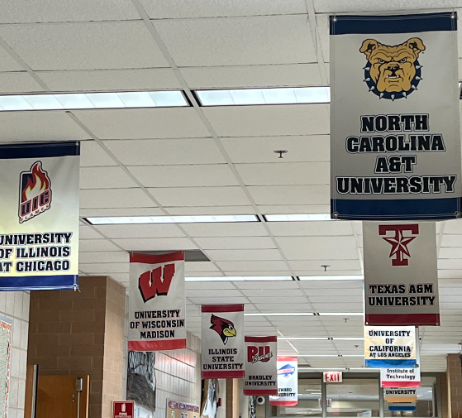

As high school students begin thinking about post-secondary opportunities, many also question how to elevate their resume over the summer. Common summer programs include internships, jobs, volunteering, and pre-college programs, but figuring out where to start can be difficult. College counselor Ms. Noa Solomon-Auger shared insight on how to decide which option works best for you.
Internships vs. Pre-College Programs
Although internships and pre-college programs are often discussed together, they are not the same, and it is necessary to understand the difference in order to decide what will work best for you.
Internships are usually hands-on, experience-based programs that allow for students to work somewhere related to their academic or personal interests. Internships are a very broad category. It can be paid or unpaid, short-term or long-term, or similar to an apprenticeship.
Internships are made to help students develop their professional skills and build their resumes. Additionally, they can help students decide whether they actually want to pursue a career in that specific field.
Alternatively, pre-college programs are usually academic programs. They are typically offered through colleges or universities and involve taking college-level classes.
Pre-college programs are a sufficient way to build academic skills and explore your interests, however, Ms. Solomon-Auger also noted that pre-college programs “are often expensive, and students should never feel pressured to pay for them.”
The College Angle:
What role internships and pre-college programs play in college applications and admissions? While these programs can be useful, neither of them are required for college admissions.
Instead, colleges look for engagement, and, according to Ms. Solomon-Auger, “There’s no right or wrong way to demonstrate engagement…They’re asking how is a student getting and staying involved outside of class? But there are a lot of other ways for students to demonstrate that engagement, whatever that looks like for them.” This could look like family responsibilities, paid work, independent research, or an internship/pre-college program.
College admissions itself is a much broader topic, and many colleges utilize a holistic review process, which means that they consider every part of a student’s application. This includes the expected factors like grades and course rigor, but also includes essays, recommendations, extracurriculars, and other activities outside of school.
Internships and pre-college programs are just two of many ways that students can show involvement and engagement outside of school. Jobs, volunteering, family responsibilities, clubs, and projects are all equally good representations of your skillset.
How To Find Opportunities
The first way for Northside students to find opportunities is by checking the counseling Google Classroom for various links to extracurricular prospects. Additionally, students can check the Northside College Prep website for a spreadsheet with a list of many internship, job, and pre-college program opportunities available to students.
Ms. Solomon-Auger also recommends researching on your own and encourages students to start local. “What’s happening in your neighborhood that you’re excited about, that you can plug into? ”
To find internships and opportunities, Ms. Solomon-Auger encourages students to follow their interests and take charge. “For example, if a student is interested in learning more about museums, they should look and make a list of every museum in Chicago and then go to their websites and see if they’re offering internships… For students […] interested in the medical field, looking at hospital websites and seeing what volunteer opportunities they are [offering] is a great way to find out more. Looking for internships really depends on [your] experience level and academic interests,” Ms. Solomon-Auger said.
She also mentioned One Summer Chicago as a good resource, a citywide program that provides people jobs and internships through a general application.

Undecided?
Many students are still unsure of what they want to do, which Ms. Solomon-Auger stated is completely normal. She advises students to start by thinking about their priorities. Do you want to earn money, build skills, explore interests, or try something new? She explained that “asking those kinds of questions helps students narrow down what makes sense for them.”